Justice, Justice shall you pursue . . .
. . .צֶ֥דֶק צֶ֖דֶק תִּרְדֹּ֑ף
Deuteronomy 16:20
This verse from the Bible is translated many different ways, but I think this one is the most literal. Some translate it as “Righteousness, righteousness, shall you follow . . .” and some go with “Equity, equity, you are to pursue . . .” (I’m not a fan of this one).
Following my last post about Hebrew roots and given everything that is going on the world right now, I’m moved to write about the root צדק – tzedek.
Tzedek is generally understood as justice. From this root, we also have tzedakah meaning charity. A righteous person is called a tzadik.
You might notice that none of these three is strictly tied to the law. But they all relate to doing the right thing because it’s the right thing to do.
How do we know what is right?
Most religions and philosophies have some version of the most basic principle.
“Do unto others as you would have them do unto you.”
Or the opposite: “What is hateful to you, do not do to others.”
Another version is: “What you wish upon others, you wish upon yourself.”
Whether it’s about wearing a mask to protect others from coronavirus or acknowledging that we have inequality in society or acting against police brutality, we can all take a moment to consider the effect of our actions on others.
An interesting addition to the discussion of the root tzedek is that when you make it reflexive (the action of the verb is done to the speaker), it means “to apologize.” Merriam-Webster notes that to apologize more often means to excuse or defend, not acknowledge a fault. And here we clearly see a link to justifying one’s actions through the root tzedek.
I guess the real question we need to ask ourselves is: when we look inward, can we justify our actions to ourselves and others by showing that we are doing the right thing? Are we pursuing justice and righteousness?









 Zamenhof Street and Lincoln Street. Funny fact: The pronunciation of Lincoln in Hebrew doesn’t resemble the English very much. All the letters are pronounced with an extra vowel between the last l and n – Lin-co-lin.
 Outside the Orthodox Union building. They take care to bring lots of glorious color to the street.
 Near Jabotinksy Street. As I took the photos of the window box and the orange blossoms, a group of monks in brown robes tied with rope belts walked by speaking Italian. Just a typical day in Jerusalem.
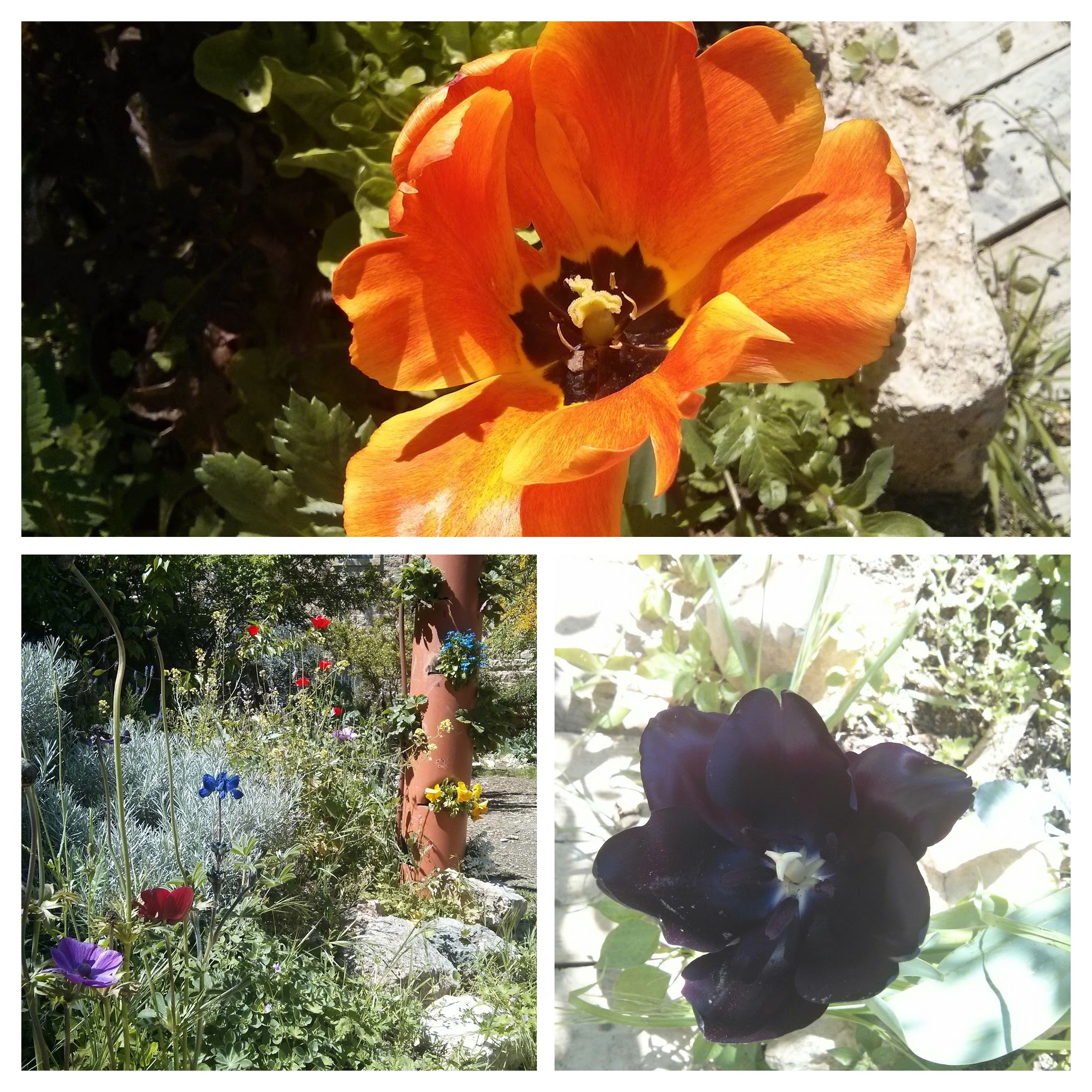
 Gan HaShoshanim. I was nearby, so I decided to take a detour and I’m glad I did. Another interesting fact: Gan HaShoshanim means rose garden, but there are no roses growing in this park.
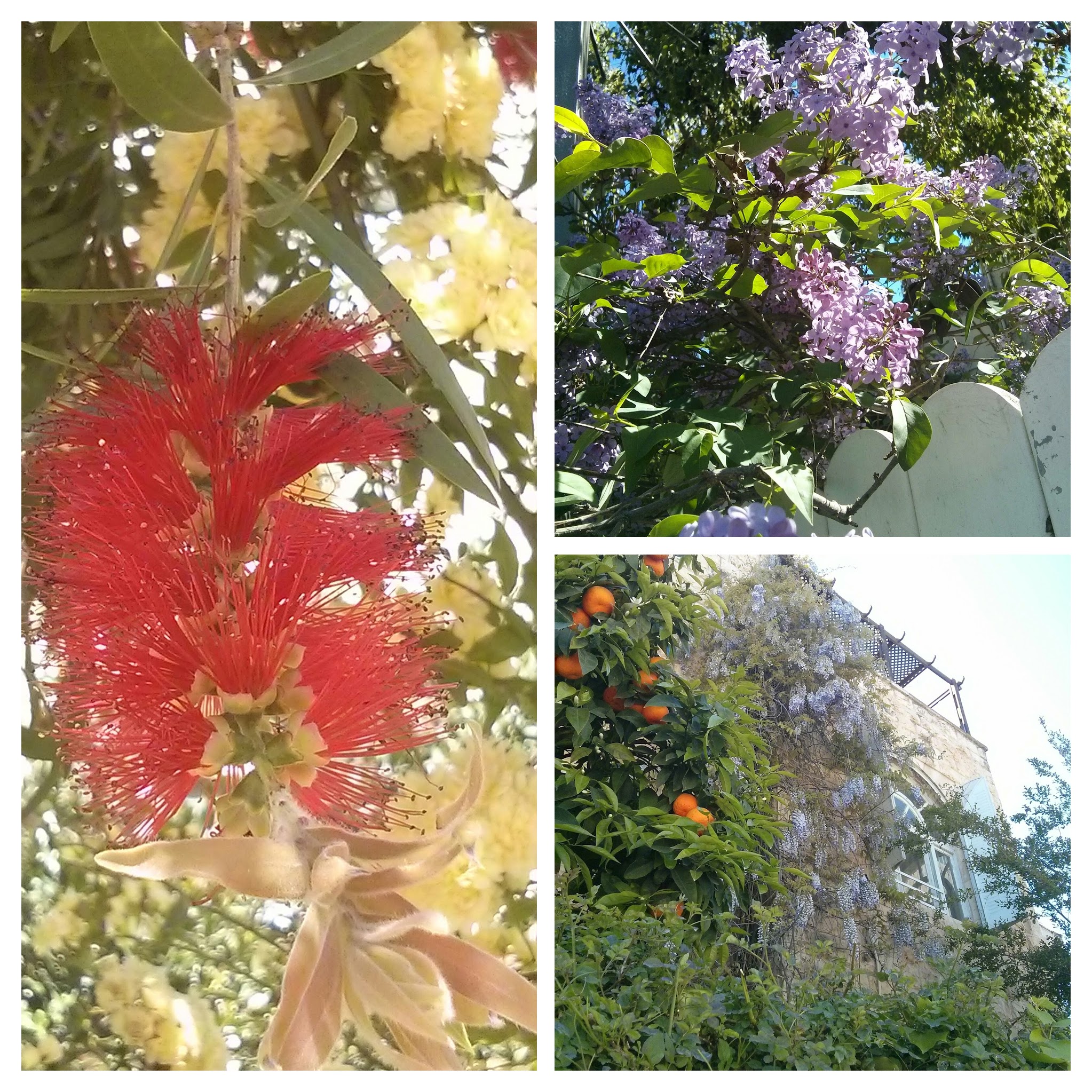
 Arlozorov Street. Wisteria, lilacs, and many other beautiful things.
 And finishing my walk with a passion fruit ice cream. I can happily confirm that it was GOOD!



 The Write Place (for me)