*7 minutes
This is a blog about life in Israel. Since my last post in 2021, we went through a bunch of elections (I didn’t think I could explain them in any coherent way), COVID closures now and again, and just life. Simply put, I had nothing to add to the conversation.
Now, it’s been a month since the nightmare of October 7, and only now have I been able to write anything. I think I’ve been in shock. I wouldn’t say denial, although I haven’t been able to watch any of the horrors or hear any stories of the heroes of that day. I would start crying and never stop.
This post will not be political or angry – though my constant doom scrolling might suggest that that’s what I want to write. Instead, I decided that I would share things that are not reported in the news in the West. This will not be a click-bait post about terrible things happening here. Jerusalem is a bubble, and we feel kind-of safe here, though I’m sure we’re not as safe as we think we are.
October 6
It was Friday night, and my neighborhood has continued to have Shabbat services in the park. The celebration was especially joyful with singing late into the night. It was the holiday of Simhat Torah (celebrating restarting the weekly readings of the Torah).
October 7
I was awakened at 8:15am by a strange noise. It wasn’t my alarm. It wasn’t anything electronic in my home. It took me a few seconds to understand that it was a siren. A SIREN. I grabbed my phone and tried to find out what was happening. I could hear my neighbors turning on radios and noises of moving around, but no panicking or hysteria.
My building is old and not equipped with a protected room. There are recommendations for safety in every scenario, so I knew that my bedroom was probably the safest place for me to be. The public shelter is in the park. It makes no sense to leave my home, go out into the street, walk for a minute, then enter the park to go into the shelter there. And I’m certainly not going out there in my pajamas.
There were a few more sirens that morning, but nothing after noon or so. Because it was Shabbat and a holiday, the news was slow to come out.
Normally on a Shabbat, I like to lounge around in my bathrobe, have a leisurely brunch, watch some shows, and putter around the house. Not on this day. I probably did something a little strange. After the second siren, I decided to take a shower, including washing my hair. I got dressed in clean clothes and put on tennis shoes. If anything should happen, at a minimum, I would be prepared. I’ve been wearing tennis shoes every day since then. If I have to run somewhere, at least I won’t be held back by improper shoes. My joke to myself is that these are my emotional support shoes. It’s not really funny, but they do make me feel better.
In the evening, we were notified that school had been canceled, workplaces that don’t have proper shelters will be closed, gatherings would be basically forbidden, and we should all stay home as much as possible.
My work let all of us know that if we were able to come in, we should.
October 8
(Don’t worry, this isn’t a day by day diary, I’m just trying to give a little context.)
The first text message I got in the morning was from my health fund. They wrote to let us know that services might be slowed down during this time, but a hotline was opened for anyone having any mental or emotional struggles at this time.
When I went out, I was immediately struck by how quiet it was – very little traffic, few people on the street, businesses closed. I called it COVID quiet.
On this day, we were just learning who had been called to reserve duty, whose family members had been called up, who had lost loved ones, who had families in danger. The horror stories were slowly being revealed. The number of hostages was rising. The shock of the atrocities was a cloud over all of us. It still is.
Since then
Reserves were called immediately. Some who were not called, came voluntarily. They called 300,000 reservists, 360,000 showed up.
Calls to action by every kind of Jewish organization in Israel and outside of Israel came right away – for food, for clothes, for additional protective and field gear for soldiers, for funds for more ambulances and medical personnel and supplies, for blood drives, for sheltering animals who were left in the communities or whose owners were killed, for workers to help in the agricultural areas in the south.
It’s estimated almost 50% of Israelis have done some kind of volunteer work this month.
Social media influencers went into overdrive for Israel. Among them are Christian and Muslim Arab Israelis.
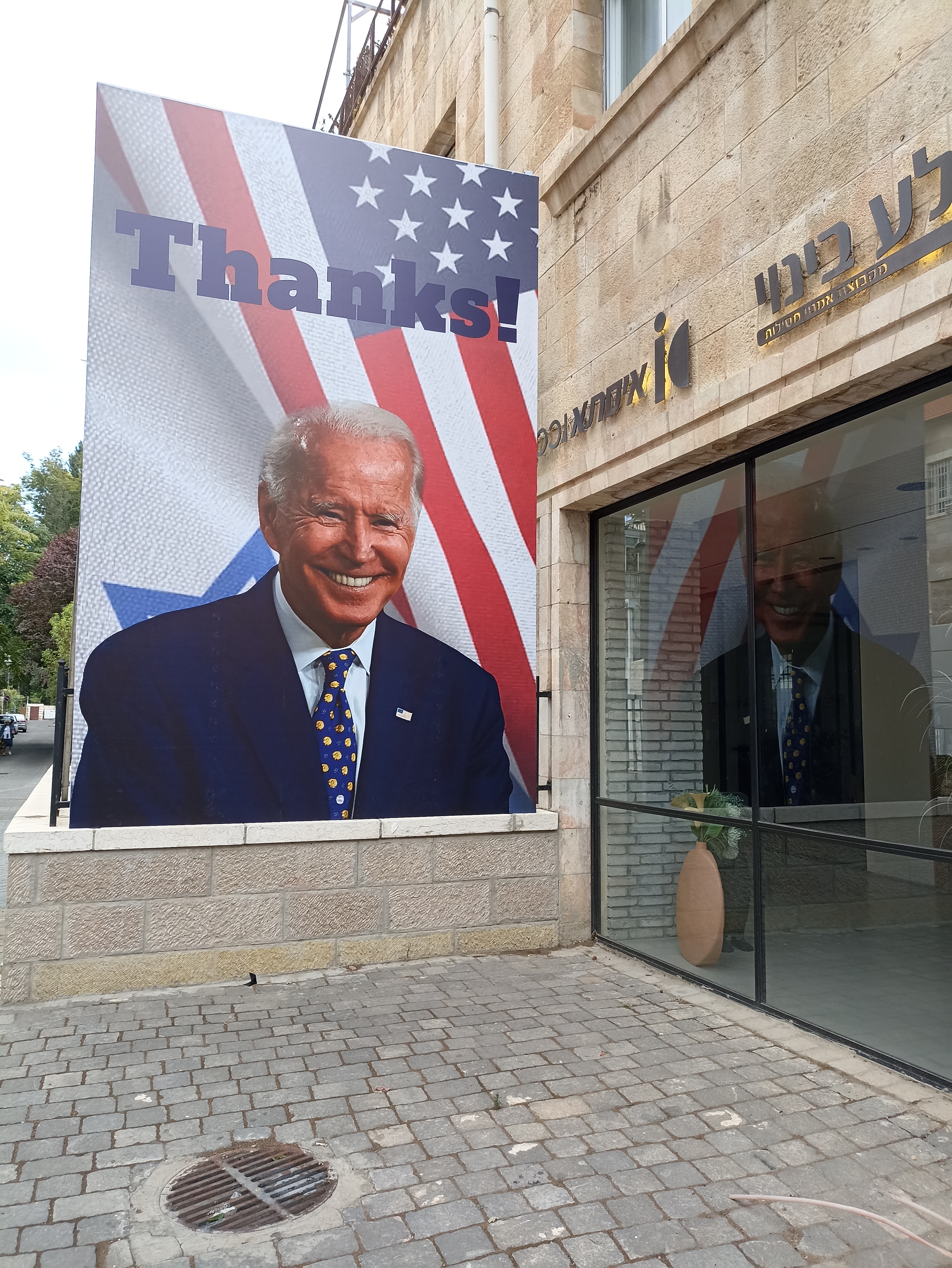
Within a day or two, billboards were covered with images of the Israeli flag. Just before President Biden’s visit, there was a huge banner with his image, the US flag, and the word “Thanks!” This week, I saw kidnapped posters. The light show on the walls of the Old City was images of the kidnapped.

Couples who had plans to get married later decided to get married now. Rather than a honeymoon, the men, and sometimes the women too, went to their reserve duty.
Israeli hospitals moved their wards into underground parking garages. They have full care facilities and operating theaters set up, and patients are protected.
It’s not easy to purchase and keep a gun in Israel. But after October 7 and after people heard that the slain usually didn’t have a weapon nearby, gun permit requests went sky-high. They expedited the process so that the paperwork would be processed more quickly and rather than a face-to-face interview, it could be done over the phone. It will still take a few weeks to process each request.
There are approximately 300,000 evacuees (from southern communities, but now also from the north) in hotels. Some real estate management companies have opened up empty homes to house families from the evacuated areas. Businesses are coming up with free activities for them so they don’t feel so isolated, alone, or abandoned. For example, the Cinemateque is screening feel-good movies three times a day for free, museums are offering free entrance and in-person activities at the hotels, retailers are offering percentages of purchases going to help evacuees. Most of the time, the programs are called something like “embracing evacuees.”
Many nights have been silent. In regular times, you can hear people out and about or hear the traffic. But now, most nights are extremely quiet. You can hear the wind. You can hear low-flying planes and helicopters keeping watch in the sky.
Plant nurseries in the south had to sell all their plants as quickly as possible. I bought a bunch and started to work on my garden. I felt like I was planting hope.
The buses are equipped with audio recordings to let passengers know which stop is coming up and that if you don’t scan your card, you could face a big fine. During COVID times, the announcement reminded everyone to wear a mask. Last week, there was a new message: In regular times and in emergencies, Egged (the bus company) will be there to provide service. We are strong together, and we will get through this together.
I’ve started seeing the motto Together we will win. A few weeks ago, the country was divided and Netanyahu and his government were teetering on the edge of the abyss. But on October 7, the country said, we’ll deal with that later, right now, we need to act together to deal with this external existential threat. Rest assured there will be inquiries about the catastrophic failures of October 7 and the lack of leadership. But first we have to succeed in removing Hamas from the Gaza Strip. The only way Israel can move forward is by being together and united.
 The Write Place (for me)