“Living in a Film”

Real life is overwhelmingly busy right now and the news is just crazy, so I’ll do what I do best and turn to fantasy.  My fantasy world exists in Korean dramas.  Yes, you read that correctly.  I really, really enjoy Korean dramas (k-drama for short).  So this post will seem like it is completely out of left field, except that I’ve titled it using Israeli slang:  חי בסרט (hay b’seret), which means “living in a film (or movie).”  Usually it refers to someone being a drama queen and having everything be overly dramatic all the time, but I’m going to use it literally.

*cultural note:  If you’ve never seen a k-drama, you can just as easily substitute rom-com, but k-dramas have some special features that adapt really well to my life in Israel.

My life is a (failed) k-drama.

When I use the term “failed,” I don’t mean it in a negative way.  It’s just that the k-drama set-up is all there and then . . . nothing happens.  So if you’ll follow my logic here: my regular life is quite uneventful but fully set up for something fantastical.  And that is a lot better than following the news and seeing what’s going on in the “real” world, which feels like someone took a page from // insert name of your favorite TV show of intrigue//.

Heroines in k-dramas often live in rooftop apartments with a great view.

I live in a rooftop apartment with a great view. (Rooftop is not to be confused with penthouse.  A rooftop apartment means that it’s a possibly illegal addition to the building and they are tiny.)

rooftopK-drama rooftop

Heroines in k-dramas often work a lot of part-time jobs and have joie de vivre.

I work on a wide variety of projects and have a lot of joie de vivre.

The cast of most, if not all, k-dramas wear coats in the house during the winter.

I’ve already explained the cold in Jerusalem, and I find I often wear my coat in the house.  (Their sets aren’t heated and they have many more coats than I do, but I think I wear my coat inside in part because my dad wore his coat in the house too.)


heirs22   heirs
Coats inside.

rihannaLyrics to Rihanna’s song “Umbrella” (this may be more familiar some readers)

Scene: Outside.  On a street corner.  Waiting for the light to change in the pouring rain.

I approached the corner thankful that I had remembered to bring my big umbrella.  I saw him standing there and the rain really started coming down just as we realized that we had a full cycle to wait before the light changed.

He was very tall, thin, wearing a well-fitting suit, but no overcoat or hat to protect his bald (shaved?) head.  I noticed that his shoulders were already wet from the rain.

As he stepped back away from the curb to avoid getting splashed, I stepped forward and shared my giant umbrella.  (Cue music!)

The top of my head was several inches below his shoulder, so I had to lift my umbrella quite high.  He was surprised as he looked down at me, and mumbled something about not minding the rain so much – but he still stayed under my umbrella.

We commented on how long the traffic cycle was until our crosswalk sign would turn green.  But mostly it was just traffic noise and the plopping of rain on the umbrella.  (Erm, awk-ward!)

Then the light changed and since his legs were so much longer than mine, he reached the other side before I did – without the shelter of my umbrella.  He wished me a “Shabbat shalom u’mevurach” (a peaceful and blessed Sabbath).

He went his way and I went mine.

And then . . . nothing.  Absolutely nothing happened.  (Unless, we have a time jump to 5 years later . . .)

umbrellaThis is not my meme.  It was just out there on the internet.

This interlude is an absolutely 100% true thing that happened to me last week.  The set up was all there and then #kdramafail.

Winter in Jerusalem

Fuzzy slippers

blankets, fleece, socks

snuggly kitty

another winter in Jerusalem

Jerusalem is located on the same latitude as San Diego.  You expect mild winters and hot summers.  So when you move here from northern climates – snow every winter, ice on the roads, negative wind chill factors – you expect to have easy winters.  And yet, if you ask around, Jerusalem winters are the coldest anyone has ever experienced.

I also think Jerusalem winters are the coldest I’ve ever experienced, even though I’m writing this sitting on my porch with the sun warming my face and with only a light fleece as a jacket.  I’m writing outside because it’s actually warmer outside than inside right now.  Winter in Jerusalem is strange and as we enjoy the daytime mild weather, we maintain that Jerusalem is the coldest place we’ve ever lived.  Here are a few of the theories.

  1. Elevation

No.  Jerusalem is only 800 meters (2,600 feet) above sea level and many of us have been to higher elevations.  Even if the wind feels like it’s blowing off of a glacier, there are no nearby glaciers.

  1. It’s the desert

Possible.  It is a known fact that deserts during the day are hot and freezing at night.  However, the actual temperature is not freezing and yet we complain more bitterly of the cold here.

weather

  1. Housing materials

Maybe.  Homes are made of poured concrete with no insulation.  Floors are covered with tile.  Their coldness is lovely during a hot summer and like living in an igloo in the winter.  To slightly counteract the ice cold tile issue, some homes have installed heating elements under the tiles so that heat is radiating from the floor.

  1. No fireplaces

I just miss a nice roaring fire.  I’ve often thought it might be nice to build a fire in the middle of my living room, but that would only be a temporary solution to an ongoing problem.

  1. Mysterious cold zones

I have walked in Jerusalem and suddenly felt an enormous chill in the air.  I have never found any explanation for this.  If you didn’t believe in ghosts before, these chilling zones might make you rethink it.

  1. It’s cultural cold

This is my theory.  In cold climates, you have the right clothes and you go from your warm home with insulation and wall-to-wall carpeting to your warm car to your warm office.  You are not feeling the cold in the same way that the cold surrounds you here.  Here you wake up in your chilly house (unless you can afford to run the electric heater all night), you put your feet on the ice cold tile when you get out of bed (slippers and area rugs minimize the chill), your hot water heater has only a certain amount of hot water (as uninsulated hot water heaters are generally on the roof to maximize solar energy), and the clothes you put on are somehow never warm enough.  As you walk to the office, it’s not so bad unless it’s raining or the wind is blowing.  The office is probably warm though, because it’s a business.  When you get home, sometimes you hang around outside until the heater warms up the space because the inside of your house feels like a walk-in freezer.

Then, once every few years it snows in Jerusalem and you forget about all your complaints because it’s just so pretty and reminds you of your childhood.  (Photos from February 2015)

November 29: Then and Now

A few years ago, I was at a Shabbat dinner with my Israeli family and my aunt opened the dinner conversation with a question:  Who knows the importance of the 29th of November?  It should have been an easy question.  After all, streets are named after the date (in Hebrew they call it Kaf Tet B’November).  A few guesses were thrown out, but no right answers.  And I answered, a bit unsure of myself, “The UN Partition Plan?”  It couldn’t be THAT easy, could it?

nov29

On November 29, 1947, the UN passed Resolution 181 that called for the partition of Palestine into a Jewish state and an Arab state.  The Jews accepted the plan and the Arabs rejected it.  In May 1948, the British left and the war began.

The historical significance is clear.  The UN recognized the Jewish connection to the land of Israel.  So when the Jews won the War of Independence and began to build a state, it was only natural to recognize the State of Israel.

It’s not surprising to me that Israelis today don’t place a lot of significance on UN Resolution 181.  The UN didn’t actually create the state, the people did.  And the UN hasn’t had a great track record on Israel since then.

This year on November 29, the UN marked “Palestine Day” and scheduled a vote on six UN resolutions against Israel.  November 29 is officially called the International Day of Solidarity with the Palestinian People per a UN resolution from 1977.  The six resolutions that were supposed to be voted on included the one ignoring the Jewish connection to the Temple mount and one calling for the return of the Golan Heights to Syria – where thousands of Palestinians have died in the civil war and where Islamic State is gaining ground.

There are those who might say that these UN resolutions are just history righting itself.  The vote in 1947 should never have happened and no Jewish connection to the land of Israel should have been recognized.

But I think a different set of questions should be asked:  Do the member states of the UN really believe that Israel should not exist?  Or perhaps Israel must be held to a different standard than other member states?  Or does a group of states have undue influence on the other members?  And if one group can exert that kind of influence, perhaps the legitimacy of the UN should be called into question.

November 29 is a notable day in history, but it’s no wonder that Israelis don’t pay attention to it.

Practicing Gratitude

It’s Thanksgiving!  This is the time when most Americans are thinking about food and football.  We had that at my house too, but my mom had a special Thanksgiving tradition.  We went around the table and said what we were thankful that year.  Sometimes we were cynical, sometimes genuine, rarely sappy or cheesy (our family doesn’t do sappy and cheesy).  Mom was always thankful for the same thing every year.  She was thankful that she came to the US and was able to give her children the freedom to make choices about their lives in a land of opportunity.  (My living in Israel seems like a rejection of the American dream, but it actually isn’t.  I made a choice and I used my opportunities to live my life to the fullest.  I am and always will be a proud American, but I chose to live in Israel.)

I want to be grateful today but I have to say it’s been a crappy week and frankly a crappy year.

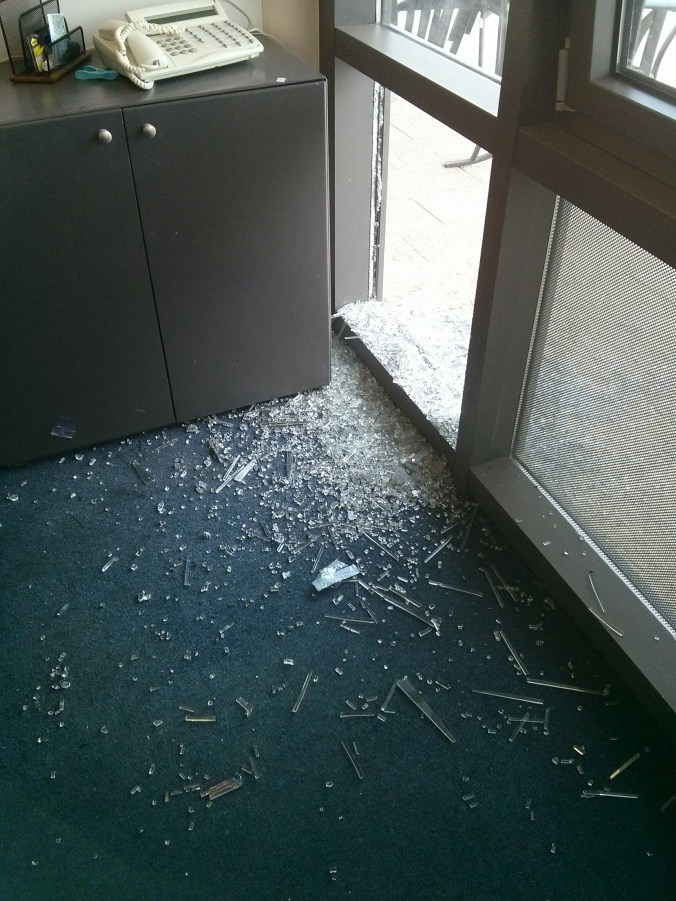
This week the office where I work was broken into.  The windows in my office and another office were smashed.  The thief – well, intruder, it seems he didn’t take anything – tore up the other office and thankfully left my office mostly untouched.  He rifled through my drawers and why he pulled out my Kleenex box, I’ll never know.  Still, it’s a basic violation of space and it felt awful.  What I’m grateful for, though, is that that he didn’t steal anything and he’s been arrested.

img_20161123_130456

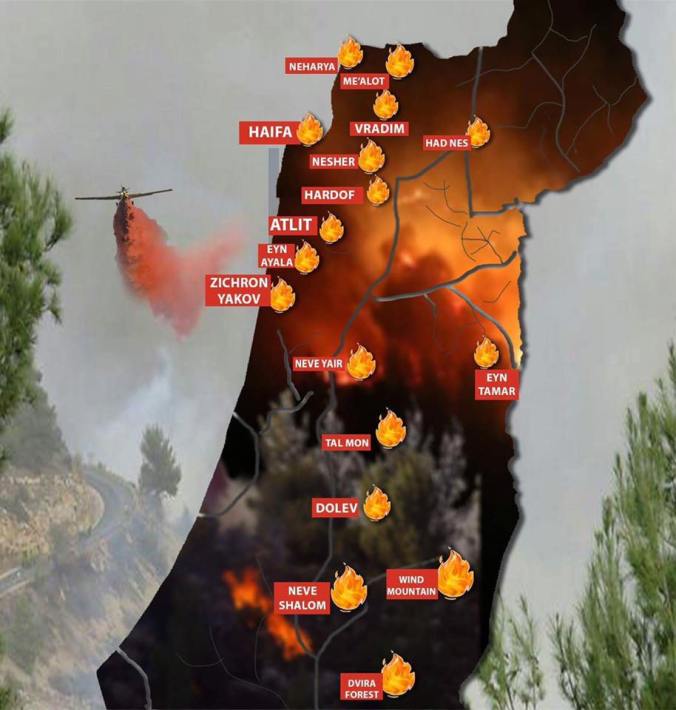
Israel is on fire – literally and figuratively.  It seems that some of the fires around the country have been arson and others are just due to the dry conditions we’re suffering right now.  Of course now it’s political.  The arson is not classified as criminal, it’s being called terrorism.  The hashtag #Israelisburning is trending in some Arab countries.  And at the same time, there are Israeli Arabs and Muslim organizations are pitching in to help out.  Fire trucks from the Palestinian authority have been dispatched to help contain the fires.  There is nothing to be grateful for when disaster strikes and when disaster becomes a political debate, but it does give people the opportunity to be generous and helpful to their fellow humans.

15192572_10154184946277689_598614414358825552_n

Source:  StandWithUs Facebook page

It is extremely dry in Israel right now.  I happen to have an electric superpower at the moment.  If I touch metal, people, my cats, or water, I get zapped.  I’m not really grateful for this, but it does give me an opportunity to remind myself that “with great power comes great responsibility.”

This year we lost many of our cultural icons.  And I lost my dad.  I’m certainly not grateful for these losses, but I am grateful for the influence they had on my life.  I’m also grateful that my dad went out pretty much on his own terms.  That’s all anyone can wish for.  I’m also grateful for the fact that death reminds us to live our lives to the fullest.  If today was your last day, would you be doing what you are doing right now?  It’s good to be reminded of that.

I think gratitude is a choice that we make.  We can be bitter, blame everyone and everything, complain until we are blue in the face, but that is just a huge waste of precious life.  Sure, it’s been a really crappy week and a generally crappy year, but I still have a lot of blessings in my life and I’m generally happy with my choices.  If today was my last day, I’d still probably be doing what I’m doing right now.  And for that I am truly grateful.

Leonard, my Dad, and the Darkness Leading to the Light

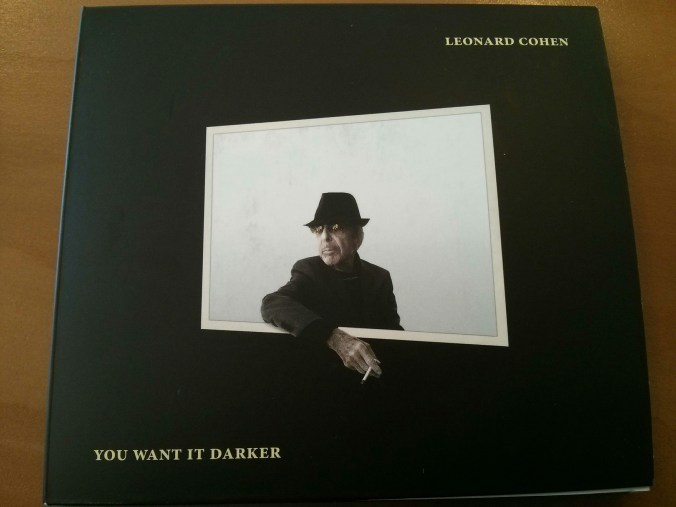
Leonard Cohen died last week at the age of 82.  He had a lot of Israeli fans and so it’s been big news around here.  (Yes, there is news about the other guy, but it seems to be a “wait and see” situation.)  Leonard Cohen gave a concert in Israel in 2009 and my colleagues at the office talked about it like it was yesterday.  Another colleague let me listen to his newly purchased Leonard Cohen CD, his very last studio album, released on Cohen’s birthday September 22, 2016.

Israelis like Leonard Cohen because he speaks their language.  I don’t mean Hebrew exactly.  I mean a cultural language that may not speak to other audiences the same way.  One of his most famous songs, “Hallelujah,” can be admired by anyone.  But the stories within it of David and Bathsheba and Samson and Delilah and their tortured love stories speak to those who know the stories and who are philosophers and questioners deep in their hearts.  Like Leonard Cohen.  And like my dad.

Leonard Cohen may have dabbled in Zen Buddhism, but he was a Jew through and through, and I think that’s what Israelis like the most about him.  No matter his journey, he’s still one of us.

The first song on the new album is called “You Want it Darker.”  Everyone is talking about it now because in it he essentially tells God that he is ready to die using the biblical phrase “heneni” – here I am (here’s a great article about it from September).  I happened upon an 11-minute video published this week by Rabbi Jonathan Sacks (former chief rabbi in the UK) linking Leonard Cohen’s song to the Torah portion this week.  It’s excellent and worth your time.

Rabbi Sacks explores the fact that Leonard Cohen uses the chorus “heneni” in the same way that Abraham does in the Torah.  This week’s portion is the story of Abraham taking Isaac to be sacrificed.  When God calls to Abraham, Abraham answers “heneni.”  He also points out that the lyrics echo the prayer for the deceased that mourners say (called Kaddish) and that Cohen is saying Kaddish for himself. Cohen noted in his last interview that he was ready to go.  He had his house in order and said: “Spiritual things, baruch Hashem”—thank God—“have fallen into place, for which I am deeply grateful.”  (Audio here.)

I mentioned last week that Dad regretted not being able to be here to see the results of the election.  Now I wonder what he would have made of Leonard Cohen’s last song.  Dad was angry at God at the end – it’s still a little unclear to me exactly why, but he said it a lot.  I don’t think he meant it in a personal way.  I don’t think he was angry at God for giving him cancer, but he was angry in a larger sense.  The world is pretty crazy right now and I think Dad blamed God for making people this way (it’s also possible that he blamed people for making God this way, but that would be at least a two-hour tangent in a conversation with Dad).

And here we have Leonard Cohen saying, yes, the world is pretty crummy and I’m ready to check out of the Chelsea Hotel permanently.  Here I am, Lord.  I wonder if that thought would have given Dad some peace.  The first verse would have spoken directly to Dad, I think, and he might have felt that the rest of the song was worth listening to and thinking about.

If you are the dealer, I’m out of the game
If you are the healer, it means I’m broken and lame
If thine is the glory then mine must be the shame
You want it darker
We kill the flame

Listen here:

As far as I know, Dad was not a fan of Leonard Cohen, but Dad was a questioner and a philosopher at heart.  He was curious and from time to time deeply spiritual.  I hope that Dad and Leonard will get a chance to meet wherever they are and talk about these big ideas.  I imagine that they’re probably smoking cigarettes, drinking coffee, and talking late into the night.  I’m sure there will be plenty of circular tangents and maybe even a few answers to their long-held questions.

Cover of the album

img_20161117_111431Dad and Leonard Cohen didn’t look alike, but the echoes are there.

Spaghetti Westerns

Dad and I used to watch old movies together.  Memories from my childhood include the movie theater, the cable channels American Movie Classics (AMC) and Turner Broadcasting System (TBS), and lots of black and white movies.  Dad woke me up in the middle of the night once to watch the original of The Hunchback of Notre Dame.  I remember that as he shook me awake he told me then that it was the original with Lon Chaney.  Why he didn’t just record it, I’ll never know, but I was seven or eight, it was 3am and the memory has always stayed with me.  (The original Hunchback features Charles Laughton.  Dad got it wrong.)

This week I went to see the new version of The Magnificent Seven.  I don’t think that Dad and I ever saw the 1960s version, and I’m sure that we never saw the original Kurosawa version.  But as I watched the film, my mind was suddenly flooded with memories of watching westerns with my dad.  The one I remember that we watched a few times was Once Upon a Time in the West, with Henry Fonda as a villain and Charles Bronson as a man seeking justice (or vengeance?).

magnificent_seven_xxlg

once-upon

Once Upon a Time in the West trailer

The day after the election, the Cinemateque was playing A Fistful of Dollars with Clint Eastwood.  This Sergio Leone spaghetti western was a scene by scene homage to another Kurosawa film, but to me it was another way to connect with my dad, so I went.  It was especially poignant to me that this film was played after the election because in one of the last conversations I had with Dad, he told me that he regretted that he wouldn’t be able to live until November.  He wanted to know how this crazy election would turn out.  Honestly, I don’t know what he would have thought about the results.  But one thing is for sure, he would have had a lot to say about it.

dollars

A Fistful of Dollars trailer

Watching old westerns stirs up American pride in me.  It occurs to me that the stories we tell ourselves are the mythologies of our culture.  Instead of stories told around the fire, passed down verbally from generation to generation, we have books and movies.  These characters speak to us in a deep and profound way.  For me, westerns are infused with individualism, self-reliance, pride in making a life on the frontier, a spirit of adventure, and courage.  This is what I feel is good about America.

The hero tends to be a man from nowhere, maybe without a name.  He blows into town and shakes up the status quo, which is exactly what the townspeople need, but are afraid of.  He’s cool.  He says what needs to be said.  He doesn’t care who he offends.  He operates with his own set of morals and principles.  But in order to get the change they desire, the townspeople need him and want him to do what they can’t do.

But the hero isn’t the guy you take home to meet your parents. He doesn’t stay around and take on the job of sheriff.  He doesn’t get elected mayor.  He does what has to be done and then he leaves.

Hollywood is trying to change this hero myth by making movies about teamwork (The Avengers, X-Men) and responsible leadership (“with great power comes great responsibility”), but the hero in the western is larger than life and America still admires him.

Epilogue

Trump is president-elect.  Leonard Cohen died.  We are in a cycle of supermoons.  We definitely live in interesting times.

A strange thing happened today.  I looked out my door and a pink balloon landed on my balcony.  The wind blew it around a bit and it hesitantly approached my door.  The next thing I know, it’s bouncing into my house.  Nothing is certain, but maybe, just maybe, it will all be ok.

img_20161112_105100

Miracles and Wonders?

A few years ago my brother came to visit me in Israel and on the day he was going to fly out we went on a tour of the Old City.  The first stop was the Western Wall and he decided to buy a kippa rather than wear a borrowed one to go up to the wall.  For some reason, he decided to continue wearing it.  We couldn’t go up to the Temple Mount because visiting hours had been in the morning, but we did go to the Church of the Holy Sepulchre.

“Aren’t you going to take that off before we go into the church?” I asked.

“No.  Why?  Can’t I wear it?”

“Well, it’s a little odd to visit a church wearing a kippa, but I guess it’s ok.”

So we wandered through the many chapels of the church and finally made our way to what is said to be the actual burial place of Jesus.  There was a line to get into the shrine, but my brother decided he wanted to see it.

“Seriously, you should really take the kippa off now.”

“Why?  Nobody is saying anything.  Are they going to stop me from going in?”

“Urm…well, no.  But no kippa-wearing Jew would go into the Shrine.”

But in he went.  No one said a word to him and no one gave him a second glance.  I don’t know if it was the fact that I’d taken on a cautious Jerusalem mentality, or if it was just the fact that my brother was an American tourist.  I think it’s pretty safe to say that my brother is one of the few people, if not the only person, wearing a kippa who went into Jesus’s burial shrine.

aedicule_which_supposedly_encloses_the_tomb_of_jesus-lr1

By Jlascar – https://www.flickr.com/photos/jlascar/10350934835/, CC BY 2.0, https://commons.wikimedia.org/w/index.php?curid=34030982

(Small aside: Not everyone agrees that this is the right place.  There are those who say it’s in a garden near the Damascus Gate and still others who say there’s a family grave in the neighborhood of Talpiot.)

With the US election next week and the Chicago Cubs winning the World Series, people might not have heard that Jesus’s tomb in the Church of the Holy Selpulchre was opened this week.  Yep.  That Jesus.

There are two great articles in National Geographic about it and a few amazing pictures.  See here, and here (this one has video!).

The fact that the tomb was opened and is being explored and restored is frankly miraculous.  Absolutely nothing can happen in the Church of the Holy Sepulchre without all the sects agreeing on it.  The “immovable ladder” is a symbol of the lack of agreement.  This is a ladder that stands on a ledge that cannot be removed because the sects are unable to agree about it.

OLYMPUS DIGITAL CAMERA

By Seetheholyland.net – Church of the Holy SepulchreUploaded by Ekabhishek, CC BY-SA 2.0, https://commons.wikimedia.org/w/index.php?curid=21249405

In the end, they all agreed because the tomb had suffered some water damage and they finally got some money to undertake the repairs.

Given the centuries of discord among the sects in the church and the UNESCO resolutions in the past few weeks, it’s especially interesting to mention who holds the keys to the Church of the Holy Sepulchre.  The key was given to two Muslim families starting 1,400 years ago and to this day the families still hold the key and open the door every day.

But then I wondered if Muslims consider the site sacred too, since Jesus is a prophet in Islam.  They do, but they pray in the Mosque of Umar instead of in the church.

The Patriarch offered a place for him to pray in the church and laid out a straw mat but Umar (may Allah be pleased with him) refused, explaining to the Patriarch, “Had I prayed inside the church, the Muslims coming after me would take possession of it, saying that I had prayed in it.”  Tradition has it that he picked up a stone, threw it outside and prayed at the spot it landed. The present Mosque of Umar was built over this place by Salahuddin Ayyubi’s son Afdhal Ali in 1193 CE. (Quoted from source.)

The Christians are in agreement, the Muslims protect the heritage, so just maybe there’s hope for the Temple Mount.  We live in a land of miracles and wonder.  Anything is possible!

In the Beginning, Again

Monday was the final day of the holidays, Thursday it rained for the first time this autumn, and tomorrow we’ll change our clocks.  Autumn has arrived in Israel.  I do miss the changing colors of the season, but Israel has its own charms.  Fall and winter are greener and brighter (and wetter!) than summer.  Spring, as everywhere, is the season of awakening.

We’ve come to a new year with Rosh Hashana, we cleared our spiritual account with Yom Kippur, we reminded ourselves that everything is temporary during Sukkot, and as a final preparation for the upcoming year, we start reading the Torah again from the beginning.

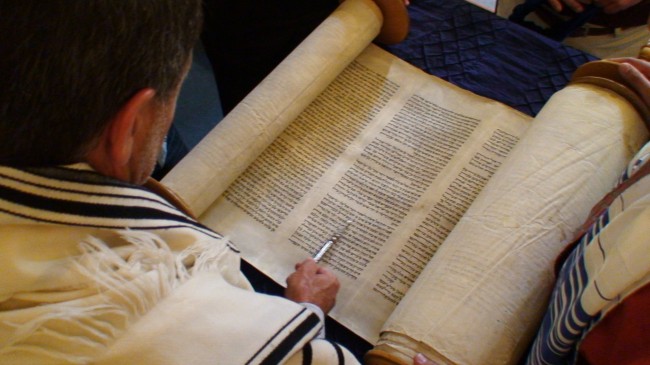
reading-torah

Every week a portion of the Torah is read along with a relevant passage from the Prophets.  The Torah refers only to the Five Books of Moses; the whole of the Bible is referred to as the Tanakh, an acronym of Torah, Nevi’im (Prophets), Ketuvim (Writings).  The Torah portion is read aloud in the synagogue and studied during the week.  This goes on for the whole year and at the end of Sukkot, they begin again.

A cynic’s view is that you have to have something to do every week.  But the more philosophical view is that every time you read the passages, you learn something new or have a new insight or see in a new way how it applies in your life.  The value is in the process of learning, not in the reading itself.

The Torah in the synagogue is a scroll.  It’s hand-written with a quill on parchment by a specially trained person who writes the Torah with full focus, intention, and concentration.  It really is a work of art.  However, unlike a book, you can’t just flip back to the beginning.  The most interesting and amazing Simhat Torah (the name of this holiday) I spent was at Hillel.  We unrolled the whole Torah and looked at the beauty of this work of art unrolled completely on several long tables.  We sang some joyous songs and then we rolled it back up.  The tradition is to read the last words of the Torah and then after it’s rolled back up, read the beginning lines.  It’s feels less like an end and a beginning, but rather like the completion of a circle.

“Circle of Life” – The Lion King (yep, I went there)

***

UNESCO, Again

In other events that happen over and over, UNESCO had another vote this week on the resolution on the Old City of Jerusalem and the “Al-Aqsa Mosque/Al-Haram Al-Sharif.”  This version still does not use the phrase “The Temple Mount” and removed the phrase saying that Jerusalem was important to the three monotheistic religions.

It passed, again.  I don’t think that reading and re-reading the text will give us any new understandings of the intent of the document.  However, keeping with the theme of circles, we can be sure that “what goes around comes around.”

Jerusalem Lovefest, I mean, Parade

After last week’s UNESCO vote, the Jerusalem Parade is extremely well-timed.  There will be a new vote on the UNESCO resolution, but it feels like rumblings rather than outright condemnations of an obviously biased document.

During Sukkot, Jerusalem is filled with both Jewish and Christian tourists from all around the world.  The streets are filled with families, restaurants have sukkahs (booths) outside, and there is a festival atmosphere throughout the city during the whole week.

For many years, I thought the parade was primarily a Christian thing, but it turns out that the first parade was in 1955 during Passover.  Then after 1980 when the Christian Embassy was founded in Jerusalem the parade evolved into what we have today.  The parade begins with Israeli groups – banks, insurance companies, army units, corporate groups, and others – and then the Christian groups from around the world join in.

The Christian groups are often singing songs in Hebrew to show their support.  Not being Hebrew-speakers they tend to choose the ones with simple and repetitive lyrics, but strong messages.  “Am Israel, Am Israel, Am Israel, Chai!” (The people of Israel live!) “Havenu Shalom Aleichem” (We wish you peace) “Ya’aseh Shalom, Shalom Aleinu v’Al Kol Israel” (May He bring peace, peace to us and all Israel).

Here are a few pictures from the parade.  I chose them based on the ones that turned out rather than any other criteria.

The Chinese took the phrase “Go Big or Go Home” to heart and had the biggest flags and banners and also brought along the Ark of the Covenant with trumpeting angels.

img_20161020_163341

Hungary had its own group, but the Gipsy nation came on its own.

All the northern countries were represented, but these were two signs I caught.

All around the world is not an exaggeration:  Fiji, New Zealand, Bolivia, Thailand, Taiwan, Zambia, Kenya, South Africa, France, Germany, UK, Ireland, US, Canada, and more and more and more.

My wish for this holiday season is that all these people would call their UN representatives and let UNESCO know that they came to Israel to strengthen their Jewish and Christian connections to the land.

*Note:  Christians are not allowed to proselytize in Israel.  They are not permitted to hand out any religious material at all.  So this event is a surprisingly non-political, non-religious event that is very simply an expression of support and love for Israel the country, not its government or policies.

UNESCO Rewrites History

Mom told me a story once about her mother and how she had once been a history teacher in the Soviet Union.  She was helping her students prepare for a big exam and reminding them how a certain general was a “hero of the people.”  During the week of preparations, this general became an “enemy of the people,” so all the questions about him were changed to reflect his new status.  Grandma was disillusioned and changed careers to become an accountant.

That was the Soviet Union then.  This is now.

This week a UNESCO resolution is trying to rewrite history and suggest that Jews and Christians have no connection to the Old City of Jerusalem.  I mentioned the resolution in a blog post in July and discussed very briefly the postmodern idea of “narratives of history” in May.

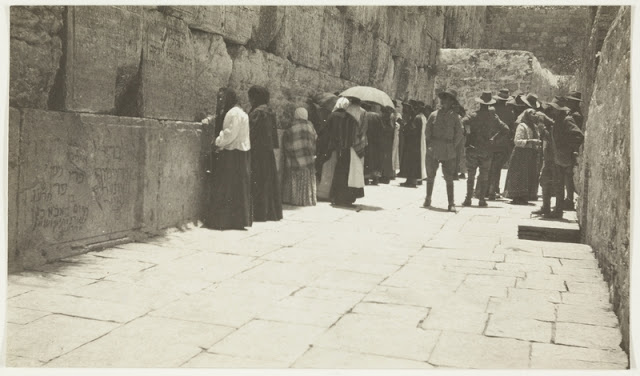
The main problem (among many others) with the resolution is that it purposely eliminates or minimizes the Jewish names of the holy sites:  Al-Aqsa Mosque/Al-Haram Al-Sharif is never referred to as the Temple Mount and Buraq Plaza is the name for the “Western Wall Plaza” (quotation marks in original).  Full text is reprinted here.

The “Buraq Plaza” of 1916-1917 – not much of a plaza and not a Muslim site.

nsw-aussie-soldiers-at-kotel

Source

The Office of Foreign Affairs posted this on their Facebook page to highlight the changing of history aspect of the purposeful elimination of names.

14633363_10154057522256317_3844728892048890717_o
Prime Minister Binyamin Netanyahu issued a statement that said:

To say Israel has no connection to the Temple Mount is like saying that China has no connection to the Great Wall of China or that Egypt has no connection to the pyramids. With this absurd decision, UNESCO has lost the modicum of legitimacy it had left.

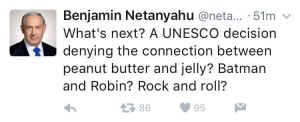
And he followed it up with this tweet.

tweet
In my opinion, the most worrisome thing is the vote.  The resolution was approved in committee 24 for and 6 against, with 26 abstentions.  The countries that stood up to vote against this resolution were: Estonia, Germany, Lithuania, The Netherlands, United Kingdom and United States.  I applaud their strength!  I wonder about the countries that abstained.  They chose not to vote yes, but could not bring themselves to vote no.  Abstaining doesn’t mean they get to pretend this resolution didn’t happen.

UNESCO’s Director-General issued a lukewarm statement mentioning that all three monotheistic religions have a connection to the Old City, but did not cancel or condemn the resolution.

In response, Israel’s government has suspended cooperation with UNESCO at this time.  And rightly so.

Being a UNESCO Heritage Site used to be a badge of honor.  But if UNESCO can vote on and pass resolutions that skew and twist history to suit a particular agenda, doesn’t it call into question all of UNESCO’s decisions and resolutions?  Is UNESCO a new totalitarian regime telling us what history is?