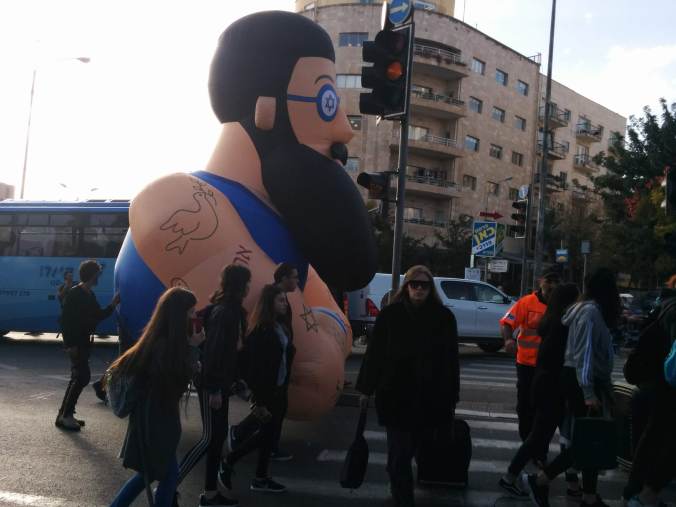
A Wall, a Fence, and Border Security

Israel’s border security is the inspiration for the US’s southern border security solutions. Our security doesn’t involve surrounding the whole country with 35-foot-tall concrete slabs. We built smart fences with layered security. Only 5% of the security barrier in the West Bank built to stop terrorism consists of very tall concrete slabs.

Here I’ll focus on the border fence built between Egypt and Israel to stop the flow of unauthorized migration from Africa.

The February 2017 US Senate report (you can read it here) compares the efficiency and efficacy of Israel’s border security to that of the already existing southern US border solutions. Israel’s fence is better by far.
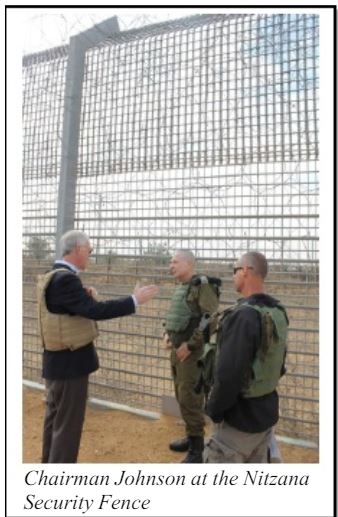
fence

  • 150 miles of fence cost US$415 million
  • Yearly maintenance cost is US$58 thousand per mile
  • It was built in 2 years and the physical structure is made of rebar, barbed wire, and concrete buried underground
  • It’s about 15 feet tall
  • There was a 10-mile section that was easier to breach so they raised that section to 25 feet

Does Israel’s fence “work”? Yes. From tens of thousands of migrants coming through the border, last year fewer than 20 came through.

But here’s what the security fence didn’t do:

  • Write a formal immigration policy for Israel (it never occurred to anyone that non-Jewish people would want to live in a Jewish state, so there are guidelines but no formal policy for people who fall outside the definition provided by the Law of Return)
  • Deal with the tens of thousands of migrants already in Israel
  • Deal with security or trafficking at airports, maritime ports, or any other points of entry not covered by the fence

If the US followed Israel’s plan, here’s what should happen:

  • The US southern border needs about 13 of Israel’s fences (all things being equal), so it should cost US$5.4 billion. This doesn’t take into account terrain differences, proper oversight, consistency, eminent domain issues, etc. Even if you round up for other factors, let’s say US$10 billion
  • It should cost $112 million dollars per year for maintenance

The US already has 650 miles of fence.

  • The lower estimate given by the Senate report says it cost $2.3 billion (though another report says over the years it has been $7 billion). At US prices, Israel’s 150-mile fence would have cost US$530 million (or up to $1.6 billion)
  • Maintenance today on the US fence is US$77,000 annually per mile (or almost US$20,000 more per mile than Israel’s)

In short, the existing US fence was more expensive to build and is more expensive to maintain. But somehow it’s not effective. If the US builds a new fence using a plan based on anything other than Israel’s fence, it will be a case of throwing good money after bad.

Israel’s fence deals with a specific issue: unauthorized African migration, mostly from Eritrea and Sudan.

The US southern border fence claims it will deal with two specific issues: immigration and crime. So I checked a few statistics.

So if the border security “works,” it will stop approximately 400,000 people from entering the US via the southern border. It will do nothing about visa overstayers, nothing about “unauthorized” immigrants already residing in the US, nothing about immigration policy, nothing against any kind of trafficking (most likely), nothing for any other border sector, airport, or maritime port, and nothing about immigration from any other region than Mexico and Central America. It will also probably be over budget and improperly and expensively maintained. In addition, those who might have come via the southern border will likely find alternate routes.

Trump’s US border wall is a Golden Calf. Some will bow down and genuflect to its glittery greatness, and it might even make some people feel better. But like a statue, no matter how much you pray to it, it won’t actually do much.

An Israeli Neighborhood Moment – Home

I went across the street to the local makolet (the equivalent of a mini-mart) to pick up a few things. I chatted a bit with the cashier and an older neighborhood guy joined in the conversation. At a certain point, it was just him and me.

“Have you lived in the neighborhood long?”

“A few months.”

“Oh, where do you live?” (Anywhere else you might think twice about answering this question, but this is Israel.)

“Over there at number ___.”

“Oh, yeah? I was born in that building! Now I live across the street at number ___.”

I found out the guy was in his mid-60s. That means his parents moved into this neighborhood a few years after the state was born, raised their kids, and some of those kids stayed right here. He told me that he lived in his parents’ apartment in my building until he was 28 and got married.

Israel is only 70 years old. I used to meet gray-haired people who built the state. Now here I was meeting a gray-haired person for whom the state was built. In his lifetime, he didn’t remember a time when there wasn’t an Israel. His parents did, but he was born and raised right here on this street with a birthright to the Jewish homeland.

This must be a special neighborhood though. A colleague of mine lives nearby in the apartment he was born in. It used to belong to his grandparents, his parents lived there, and now he lives there with his family. His parents moved down the street.

I find it fascinating from the point of view of someone who was born in Russia, moved to Israel, grew up in the US, and moved back to Israel. Where is “home”? For me, it’s wherever I am right now. For these two, it’s this neighborhood right here and will never be anywhere else.

at-home-1099244_1920

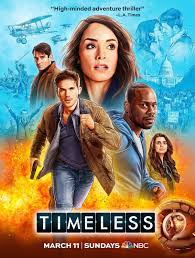
TV Review – Timeless

Short review: A historian, a soldier, and an engineer fighting a worldwide conspiracy to change history by traveling through time? Yes, please! Bonus: Goran Višnjić!

This was one of those shows that had to fight to stay on the air, but we got two good seasons. Thankfully, they had a Christmas special to tie up the loose ends and keep the door open a crack for a new series in the future.

As a historian, I found myself curious about the time periods and characters that they met. I spent time afterward looking up names and dates and thought about moments in history that might have ripple effects in the future – personal moments or historic moments. Just for sparking curiosity, I think this series is worth watching and I can’t wait to see more from Eric Kripke and Shaun Ryan.

Long review: More detailed descriptions of elements I liked. Not exactly spoilers, but if you don’t want to know, you’ve been warned.

timeless

I’ve written before about narratives in history and versions of truths and ultimate truths. And this series takes those ideas and turns them into an interesting story that opens the door to hidden histories. Each episode goes to a different time period and while we might think that the Time Team, as they are called online, is there to stop or save a big event, sometimes it’s a small event that has repercussions generations later.

This can be personal or simply an unknown story. For instance, I had no idea that a little recording session in 1936 by a guy named Robert Johnson would spark blues music, which would lead to rock and roll, the 1960s movements, and eventually to questioning authority (what the bad guys don’t want).

When you deal with merging multiple voices and multiple narratives the right way, you learn about characters you didn’t know before, like Grace Humiston, the first female Special Assistant US Attorney. She was known as Mrs. Sherlock Holmes for helping to solve cold cases involving missing women.

One fun episode was running into Ian Fleming in Nazi Germany. Fleming is the author of all the James Bond novels and he was a real-life spy during World War II. Another is stopping by the 1893 World’s Fair in Chicago. Having read Devil in the White City, I already knew that this was about one of the US’s most famous serial killers. Bonus for that episode: Harry Houdini. And what do you know about Hedy Lamarr? She wasn’t just a pretty face on the silver screen in the 1940s; if you use Bluetooth technology, then you are using something based on the principles she developed. If you haven’t seen the movie Hidden Figures, would you know anything about Katherine Johnson, a black woman working at NASA in the 1960s who made the lunar landing possible with her calculations?

A seemingly benign episode might have bigger repercussions if you think about it. The trio go back and meet the first black NASCAR driver, Wendell Scott. A number of auto executives were going to attend the race. So what happens if the execs get killed by the bad guys? Who would control the whole auto industry?

My favorite thing about the show is that it sparked my curiosity. We all know the basics of history, but to get the full truth, you have to hear all the voices. This was a great way to introduce untold stories to US audiences who suffered through white man’s history. (Or, in the vernacular of my liberal arts university: his-story.)

The great thing about this show is that we see people outside stereotypes. The historian is a young-ish woman. The engineer is a black Star Wars geek who graduated MIT. Another engineer is a Lebanese woman who likes Star Trek. The special agent in charge is Indian (from India) and is married to a black woman. The one character that is stereotypical is the Delta Force soldier; he’s a tasty morsel of all-American origin.

The show takes on the challenge of what a woman or a black man can do in history when neither one of those was respected in society. History is not seen through rose-colored glasses, but it’s not seen as the Dark Ages either. People survived and even thrived. The trio also has to make some tough choices. Would you try to stop the assassination of Abraham Lincoln?

If you watch a lot of TV and movies (who me?), then you’ll also get the inside jokes. Some of the most fun moments are when they make up names to hide their identities. Cagney and Lacey are investigators. Lando Calrissian is a record producer. John Maclane and Hans Gruber team up. Denzel Washington is a Civil War soldier. Every episode has fun Easter eggs if you’re quick enough to catch them.

Bottom line: If you like history, if you like turning what you know on its head, if you like to be challenged, and if you like laughing, then this show is for you.

The Space Between

We have national elections coming up in Israel on April 9.

**To my American readers: Try to wrap your mind around an election campaign that is only three months long!

democrats-3594094_1920

My mom asked me why I don’t seem to be so interested in the Israeli political scene, especially since I seem to have a lot of opinions on the US political scene. (To be fair, I think everyone in the world is interested in the US political scene. Every day there is some new shocking thing.)

The thing is that Israeli politics are very different from US politics.

In the US, you have two parties, three branches of government, and each state follows a similar pattern.

In Israel, for the upcoming election there are at least 11 parties. You might think that it would be easier to find a party to support, but I find it harder. The principles of each party tend to be so specific that I find myself agreeing with several principles from several parties. But in Israel, you vote for the party, not for people or on specific issues. The percentage of votes the party gets is reflected in the number of seats each party gets in the Knesset. Because one party is not usually strong enough to get a simple majority (61 seats), Israel is ruled by coalition governments. If the coalition is weak, you have elections sooner; if the coalition is strong, you have a full term of government (4 years).

You don’t vote for the Prime Minister either. The leader of Israel is the head of the party that got the most votes – again, it’s the party that matters not the person or the issue.

Israel is the size of New Jersey, but the country has snow-covered mountains in the north and desert in the south, hi-tech in the city, and agriculture in the country. But rather than have regional representation, you can only choose the party and hope that the party represents you.

Right now, people are breaking away from parties, creating new parties, getting fired from parties, getting nominated to parties (not to mention the corruption scandals and possible indictments). Only in February will we have an idea of who is on each party list.

And that’s another thing: some parties have elections within their parties to determine who is on their list; other parties just present their list. That means that if you are a member of a party, you can vote in the primary. The list is numbered by how many votes each person got (sometimes they add special interest places on the list that are likely to get a seat in the Knesset). Then, the number of seats the party gets in the Knesset (based on the percentage of total votes in the election) determines who goes to the Knesset. In parties that don’t have primaries, the leadership determines the list. If you are not a member of any party, you can still vote for any one of the parties in the main election with the knowledge that the list was determined by other people and may or may not represent you, your region, or your interests.

Israel is a little country in a hostile neighborhood, so it’s also really hard to understand how a political swing here or there will affect the country in the short, medium, and long term. As a voter, you have to trust that the coalition that the head of the leading party came up with will protect the citizens, will strengthen the economy, and will do what is right for Israel.

So, it’s not that I’m not interested in the political scene; it’s more that I can’t find myself in the political scene. I do my civic duty by voting (it’s hard not to, it’s a day off!) in the hope that the party I choose will do the best it can for Israel. I don’t feel that any party represents me personally, so from the space in between the parties, I allow myself to be an observer of the process.

Book review – How to American: An Immigrant’s Guide to Disappointing Your Parents

I had never heard of Jimmy O. Yang until I saw him play a small role in Crazy Rich Asians. I wasn’t that impressed, but he turned up on Youtube suggestions and I still wasn’t wowed. I’ve never seen Silicon Valley, so I really had no reference point to evaluate who this guy was.

But then I saw his book on audible.com and the title intrigued me. It got great reviews and I like a memoir, so *click*, in my basket and in my ears. Jimmy reads his own book, so you get to hear his story in his own voice. Always better.

Short review: I liked it and I definitely recommend it, but it isn’t for everyone’s taste. The humor is sometimes juvenile (sue me, I like juvenile humor and laughed out loud). There’s some swearing (not gratuitous). Some of the situations are not mainstream (he was a strip club DJ; not my idea of the American Dream). Still, it will make you think about the immigrant experience in America. More than that, it’s a story about finding and following your dreams, even when everything seems to be a strike against you.

Long review: Well, more like a response (below the promo video).

Jimmy O. Yang is a very insightful, well-spoken, college graduate, so this book is not a string of funny stories and jokes. When he uses the Chris Rock-style voice, it’s meant to be funny (and it is). But when he uses his normal voice, you can be sure something thought-provoking is on the way. He was born in Hong Kong to parents from Shanghai and moved to the US when he was 13. He also had a study abroad experience in Italy during college. He has a very deep understanding of what it means to be so obviously a fish out of water and how to survive it, thrive, and then find and follow his dreams.

I’m an immigrant several times over and the child of an immigrant, and many of his insights really ring true to me. He learned English from BET (thus the Chris Rock stylings), while Mom and I learned English from Sesame Street and Mr. Rogers – I was 3; I imagine Mom watched other programs too.

One big difference in my immigrant story is that I am not obviously an immigrant in America. I have no accent. I’m white. I spent a lot of time learning how to be the most American I could possibly be, except for one thing: I am Jewish and I did “crazy” things like walk out of music class when it was Christmas carol season. I purposefully set myself apart. Was it me embracing the American ideal of individualism? I doubt it. I was also set apart because Mom had an accent and came to school to talk about Jewish holidays.

I remember in 8th grade a Vietnamese girl joined our class. I wondered how she would fare. She was embraced whole-heartedly by all the popular kids and became super All-American. And I knew then that, while it didn’t help that I was born in the Evil Empire (thus a Communist, whatever that means to junior high kids) and I was also responsible for the death of Jesus, it would be an uphill battle for me to become super All-American.

I’m also an immigrant to Israel. Here I have an accent and it’s pretty obvious that I’m not a native-born Israeli. But nobody cares. Oh, you were born in Russia and your mom is Russian? Join the club. Half the population has roots in Russia and more than a million Russian-speakers came to Israel in the 1990s. Oh, you’re Jewish? Welcome home!

So the two things that made me not-quite American are the two things that make me more Israeli. And being not-quite American makes me not quite fit in with other American immigrants here in Israel. And throw in the great love of British humor and Korean dramas and I’m a nation unto myself. (You might note that Russian is out. That’s a story for another day. Ya nye gavaru pa’ruski. ‘Nuff said.)

One of the roles that Jimmy is most proud of is Dun Meng, one of the heroes in Patriot’s Day, the film about the Boston Marathon bombing. He had a chance to bring some authenticity to the role (including getting his real dad to play his big-screen dad) by bringing in the correct accent to the Chinese dialogue. How many non-Chinese-speakers would really notice the difference between a Cantonese dialect and a Shanghai dialect? He also connected to the role because he was playing an Asian immigrant in America. He mentions connecting to the Asian immigrant experience a few times in the book as something comfortingly familiar – “this person is like me.” It’s not a struggle like some of his other cultural experiences in America.

Israel is a small country with lots of immigrants. When so many people are immigrants, the details don’t matter because we are all struggling with the same things. The one thing the majority of the population – whether native or immigrant – is sure of is that we are all part of the nation of the Jewish people living in the modern State of Israel.

Still, I’m not exactly Israeli and I’m not exactly American. I guess I’m a fish with legs playing on the beach in and out of the water enjoying both water-life and land-life.

Bottom Line: This book was especially touching to me given my immigrant experiences, but the truth is that this book is for all kinds of people. It’s an inspirational story about someone overcoming internal and external obstacles, making life-changing choices, and pursuing his dreams (even if his dad tells him that pursuing dreams is what makes people homeless).

I love a parade!

Israel doesn’t generally do parades in the American style, but this year we had a special treat. Ok, it wasn’t Macy’s (that was a rumor that got blown out of proportion). Still, there were balloons and floats, and the American flair of classic cars and marching bands!

And we start with the Nutcracker!

IMG_20181203_142032

Going US style with US Ambassador David Friedman!

IMG_20181203_142122

Smurfy!

IMG_20181203_142522

Awesome classic cars!

IMG_20181203_142252

And a little red corvette!

IMG_20181203_143433

Compilation of the bands!


ANIMAL!!!

IMG_20181203_144223

Work it, Dragon!

IMG_20181203_144053

Wait. We’re in Israel, right? Do you see some Israeli heroes?

IMG_20181203_145458

If you will it, it is no dream!

IMG_20181203_145534

Chanukah: A light in the darkness

Man, if I was a Grinch last week, you don’t even want to know about this week. So annoyed! My ceiling is leaking and I’m camping in the living room. But there was one thing that made me feel better …

This is AMAZING!! I love a cappella to begin with and then bring in Queen, well, Chanukah doesn’t get better than that!

Cultural notes

As an American and Israeli, I noticed that this was a great cultural mix.

  1. Note the hard ch (Antiochus, Chanukah, Chai) but Mattathius.
  2. Israeli Chanukah treats (sufganiot – filled donuts) and American Chanukah food (latkes – potato pancakes). If Israelis make latkes in Israel they are called levivot (hearts – I don’t know why) and are never served with applesauce (I know, right?). And sour cream? Fuggedaboutit. Maybe gvina levana.
  3. Sevivon as well as dreidle and gelt (Israelis don’t actually know the rules to the dreidle game; they just know there’s a top and it spins).
  4. Sevivon, sov, sov, sov, as well as a clay dreidle (you gotta know your Chanukah songs for this one).
  5. Chanukiahs, but not a menorah to be found.
  6. Aba, Ema, but Bubbe (surprisingly not many grandmas are called bubbe here).
  7. Ah, but where was the miracle? Nes gadol haya po. It was here, not there (sham). We’re in Israel! (Even if Six13 are New York-based.)

So after singing this at the top of my lungs (many times), which hopefully bothers the neighbors whose fault it is that my ceiling is leaking, I’ve decided: Dammit all, I’m going to be a freaking light in the darkness.

Happy Chanukah Everybody!

Even The Dude might not abide

It was Thanksgiving this week and Israel doesn’t do Thanksgiving, so we Americans do what we can for ourselves. My family tradition is to go around the table saying what we’re thankful for and I have to admit, my thankfulness was clouded by the annoying week I had. In general, I have a lot of blessings and I’m truly thankful, but this post is a little bit of a rant.


Black Friday

For some reason, Israel has really embraced Black Friday. It’s especially weird since Thanksgiving is not a national holiday and “the day after Thanksgiving to kick off the Christmas shopping season” doesn’t exist. It’s not a kickoff for Chanukah shopping either – just to be clear. I’m mostly annoyed because if you are going to take something “Christmassy” from America, why would you take greedy materialism? It’s not even balanced by popularizing How the Grinch Stole Christmas or A Christmas Carol. There are no friends and family values as we find in It’s a Wonderful Life.

The weirdest part of Black Friday is that this year it’s mostly written in English. There were ads a year or two ago that gave us shishi shachor the literal translation into Hebrew of Black Friday. Since no one knew exactly what that meant, they switched to English so that everyone would understand it’s a big sale weekend (just like in America!). And because there is no Thanksgiving, Black Friday is a week long. Because that makes sense.

black fridayTraditional. Nothing says Black Friday like balloons.

Black friday 2

Because blue is so much more festive.

Pink Friday 2

Guess what’s for sale? Make-up and beauty products. I’m not convinced this is better.

Bowling league

I was channeling Walter at the bowling alley at the work league match this week. I’m not a great bowler, but I do enjoy it and usually the games are fun. Not everyone is Walter-serious about the matches, but the other offices participate with good sportsmanship and a sense of camaraderie among all the players.

This week we were playing against the municipality. That was probably the first strike against them. No one likes the municipality in real life, so we aren’t going to change our opinions even if it is a league game.

Their team was a rooster surrounded by hens – one was a grandmother who thought it was a good idea to bring her grandson, surely he could bowl a few turns, right?

I should mention here that bowling in Israel would horrify even The Dude. You don’t have to rent shoes; we just play in sneakers. No one follows any bowler etiquette. Thankfully the scoring is automated, otherwise who knows what would happen.

Some players are new to bowling, but obviously these people have had no guidance at all. These hens picked up a ball using their thumb, index finger, and second finger; walked up to the foul line (often over the line); started swinging the ball (and-a one, and-a two, and-a three); let go with no follow-through causing the ball to plonk on the lane and miraculously roll its way toward the pins. The worst part was that it worked sometimes – usually when I was looking. (I did manage to calm myself down by looking at their total scores; they weren’t that successful.)

I confirmed that the unusual hold is used in bowling, but it’s not standard. The swing and plonk method is ridiculous. I tried to be an example using the 4-step release, and they even noticed, but somehow didn’t realize that their bowling style was the equivalent of toddlers who need gutter-guards.

bowling-696132_1920

Correct form

One might forgive the lack of skill and knowledge, but to top it off they were rude bowlers. They were constantly in the way. They took over all the chairs with themselves and their stuff – they had more than 4 people on their team, to allow them to switch out in different games (which is legal), but they didn’t care that there was another team there.

But worst of all was the attitude that they couldn’t understand why we were annoyed. It’s like the bully in the schoolyard who pushes you to your limit and then says, “Why are you getting so upset?”

At this point, even The Dude can’t smooth it over by saying, “It’s just a game, man.”

I wanted to show the Walter “over the line” video, but it had too many f-bombs in it and I don’t want to encourage threats of gun violence. Better the dulcet tones of The Stranger reminding us to take ‘er easy while we sip a White Russian with The Dude.

Israel is not the 51st state

Sure, there’s turkey and fixings for Thanksgiving (Chag HaHodaya – Hebrew for Holiday of Thanks), there’s bowling and everyone knows about The Big Lebowski, and it was just announced that the Macy’s Thanksgiving Day Parade floats are coming to Jerusalem for the first night of Chanukah. But no matter how American Israel might think it is, it’s still in the Middle East.

Hunkering down

While I’m sure other stuff has been happening around the world, the last couple of weeks in Israel and the United States have been crazy.

IMG_20181117_183937

How we deal with it at my house

In the US, we had a blue wave in the House, more firings in the White House, CNN had a stand-off with the president, the president popped over to France, and major elections had recounts.

In Israel, the apathy of the citizens of Jerusalem was staggering – the new mayor won by about 6,500 votes in a city with a population of 865,000 with only 30% of eligible voters voting. Israel is defending its citizens against attacks by Gazan rockets (460 rockets over several days from Gaza into Israel), but now there is a cease-fire. However, the defense minister stepped down, which rocked the delicate coalition, and that may bring about national elections.

And that’s just the tip of the iceberg.

“Truth is stranger than fiction.”

Yeah? I’ll have some of that fiction now, please.

The nice thing about fiction is that it’s clean and all the boring unimportant bits are taken out. You don’t have to waste your time on details that don’t push the story along. Real life has just too much stuff going on and you don’t know what’s really important or which way to look.

I’m a fan of thrillers, mysteries, police procedurals, and I’m not averse to vigilantes with strict internal moral codes. At the moment, my fictional world is making a lot more sense than real life. But I do need fiction that makes me think. I need a theory or a particular worldview to chew on.

A few weeks ago, a British show called Strangers caught my attention. A few of the main characters are British, but it was filmed in Hong Kong with Chinese actors speaking Chinese (scenes with subtitles!). My original thought about reviewing this series was to point out that Britain is now getting in on the Asian drama wave. But I’m going to take it in a different direction.

What I loved about this show was that it was filled with twists and turns I didn’t see coming. I know the usual tropes, so I really appreciate a show that keeps you guessing. For instance, here is a synopsis of the first fifteen minutes: A woman is driving while crying on the phone. She’s hit by a truck. A self-satisfied professor starts his lecture and is pulled out of the lecture hall to be told his wife has died in a car accident. He’s afraid of flying, but goes to Hong Kong to identify his wife’s body and bring her back to England. He sees a man holding a picture of his wife. Who is this man? None other than her Chinese husband who she’s been married to for the past 20 years.

Say what? I’m hooked. And it goes on like that for eight episodes: an unexpected twist every fifteen minutes or so.

I won’t spoil it for you. The unraveling of the mystery is very well done; I enjoyed the meandering pace.

What made me think, though, was a nearly throwaway line in the first minutes of the show. The smug professor wrote a book called Do Nations Exist? The brown-nosing student says “Nations are imagined; they only exist in our minds.” The professor answers, “Surely a group of people claiming to be a cohesive whole is, at best, a lie agreed upon.”

You can watch the whole show without ever thinking about this line ever again. However, given the events of real life, you might see that the story shows you the answer. Our professor leaves his ivory tower and arrives in a dirty, dark, smoggy Hong Kong. He finds that everything he thinks is true is not, everything he expects in the world is upside-down, and all of his British cultural touchstones have no meaning in Hong Kong. He expects the police to help, they don’t. He expects the British consular officers to help, they don’t. He thinks the Chinese husband is working against him, he isn’t. Then there’s the journalist, the university friend, the activist, the refugee, the Triad gangster, the conglomerate owner, the British consul, the hotel manager – no one is who they appear to be. And what about the elections in Hong Kong? There are protests and the usual rumors and power plays. But how does it fit in? (As I mentioned, nothing is introduced that isn’t important. It’s clean and we know where to look, even if it might be misdirection on the part of the writer.)

It’s possible that the important bit of the line is “a lie agreed upon.” When you hold up the mirror of fiction to real life, you might find that everything you think is true isn’t. All your expectations are baseless. Your interactions in the world go awry because you are a stranger in a strange land.

But then why throw in nations at all? Do they exist? Well, I suppose it depends on who you ask. If you are inside, then they don’t – or don’t have to. If you are outside, then they most assuredly do.

As for me, for the moment, I prefer to stay in my fictional world that makes some kind of sense. Real life is just too crazy right now.

Here’s the opening of Strangers

https://www.youtube.com/watch?v=JMLzmQApXXw

And a quick teaser